


 Accepted Papers will be published in Springer Nature
🎓 Conference Starts In
13 October 2026
Keynote Speakers
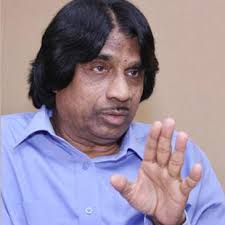
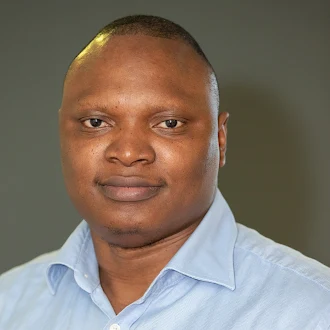


ISICVA 2026 — Programme Schedule
13 October 2026 | Techno International New Town, Kolkata
| Time | Activity |
|---|---|
| 9:00 AM – 9:45 AM | Registration |
| Session Coordinator: Prof. Bitan Misra | |
| 9:45 AM – 10:00 AM | Inauguration (Lighting of lamp and Prayer Song) |
| 10:00 AM – 10:05 AM | Welcome address by Hon'ble General Chair ISICVA 2026, Prof. Ayan Chakraborty, Principal, TINT |
| 10:05 AM – 10:10 AM | Inaugural address by Chief Patron Hon'ble Shri Satyam Roy Chowdhury, Managing Director, TIG, Chancellor, Sister Nivedita University and Techno India University Tripura |
| 10:10 AM – 10:15 AM | Address by Patron Hon'ble Mr. T. K. Ghosh, Executive Director, Techno India Group |
| 10:15 AM – 10:20 AM | Address by Hon'ble Prof. Suman Chatterjee, CEO Academics, Techno India Group |
| 10:20 AM – 10:25 AM | Address by Hon'ble Prof. Arindam Ray, Executive Director, Techno India Group |
| 10:25 AM – 10:30 AM | Address by Hon'ble General Chair ISICVA 2026, Prof. Swagata Paul, HOD, CSE, TINT |
| 10:30 AM – 10:35 AM | Conference Briefing by General Co-Chair ISICVA 2026, Prof. Chinmoy Kar, TINT |
| 10:35 AM – 10:55 AM | Address by Guest of Honour Prof. E. Balagurusamy |
| 10:55 AM – 11:00 AM | Concluding Remarks of Inaugural Session by Prof. Soma Chatterjee, Deputy Registrar, TINT |
| 11:00 AM – 11:15 AM | National Song and National Anthem |
| 11:15 AM – 11:30 AM | High Tea |
| 11:30 AM – 12:00 PM | Keynote speech by Prof. Rajat Subhra Chakraborty, IIT KGP, India |
| 12:00 PM – 12:30 PM | Keynote speech by Prof. Milan Tuba, Singidunum University, Serbia, Europe |
| 12:30 PM – 1:00 PM | Keynote speech by Prof. Timothy Adeliyi, University of Pretoria, South Africa |
| 1:00 PM – 2:00 PM | Lunch Break |
| Time | Activity |
|---|---|
| Session Coordinator: Prof. Paramita Kundu Maji | |
| 2:00 PM – 2:30 PM | Panel Discussion: “Privacy-Preserving Computer Vision” Speakers: Dr. Tapas Samanta, VECC; Mr. Samrat Chowdhury Moderator: Prof. Nilanjan Dey |
| 2:30 PM – 3:00 PM | Panel Discussion: “Human–AI Co-Creation: Redefining Creativity Through Computer Vision” Speakers: Mr. Sukalpa Chatterjee, Punscha Publication; Mr. Subhajit Das, TV9; Mr. Sayantan Thakur, Bengali Novelist Moderator: Prof. Nilanjan Dey |
| 3:00 PM – 4:00 PM | Paper Presentation Session 1 — CSE Seminar Hall-217: Paper IDs 70, 357, 284, 87 Session 2 — Language Lab 1: Paper IDs 276, 199, 293, 114 |
| 4:00 PM – 4:30 PM | Tea Break |
| 4:30 PM – 5:15 PM | Valedictory Session — Special Guest: Prof. R. T. Goswami, Pro VC, ADAMAS University |
| 5:15 PM – 5:30 PM | Vote of Thanks by Program Chair Prof. Bikash Sadhukhan |
| 5:30 PM – 6:30 PM | Cultural Event |
| 6:30 PM – 8:00 PM | Gala Dinner |
Panel Discussions
Expert perspectives on emerging challenges and opportunities in Computer Vision
ISICVA 2026
Privacy-Preserving Computer Vision
Speakers:
Dr. Tapas Samanta, VECC
Mr. Samrat Chowdhury
Session Moderator: Prof. Nilanjan Dey
ISICVA 2026
Human–AI Co-Creation: Redefining Creativity Through Computer Vision
Speakers:
Mr. Sukalpa Chatterjee, Punscha Publication
Mr. Subhajit Das, TV9
Mr. Sayantan Thakur, Bengali Novelist
Session Moderator: Prof. Nilanjan Dey
About Techno International New Town
Techno International New Town (Formerly known as Techno India College of Technology) is a promising college under the aegis of Techno India Group with a vision of delivering quality education in the field of B. TECH, MTECH, MBA and MCA. Situated in the industrial township of New Town, TINT began its journey in the year of 2005 with a group of renowned academicians and experienced professionals from the industry. The focus of this institution is to accelerate the knowledge transfer and enrich teaching-learning, research, and social outreach.
About Department of Computer Science & Engineering
The Department of Computer Science and Engineering, established in 2005, is a key pillar of the institute, known for its excellence in teaching, research, and innovation. The department has a highly qualified team of faculty members with professional training and extensive expertise in various technological domains. Faculty members are actively involved in cutting-edge research and development activities, contributing to advancements in computing technologies.
About ISICVA 2026
The 2nd International Symposium on Innovations in Computer Vision and Applications (ISICVA 2026) aims to bring together intellectuals, leading scientists, research scholars, and students from around the globe to exchange and share their research ideas in the fields of computer vision, image processing, pattern recognition, advanced computing, artificial intelligence, and related application areas. The symposium will focus on addressing current research challenges and showcasing recent innovations in these domains, fostering collaboration and knowledge exchange among participants.
Computer Vision has become one of the most transformative fields in modern technology, playing a critical role in enabling machines to interpret and analyze visual data from the real world. With advancements in AI and computational intelligence, computer vision is being integrated into a wide range of industries and applications, reshaping how we interact with technology. Its significance is evident in several key areas including healthcare and medical imaging, autonomous vehicles, surveillance and security, agriculture, manufacturing and robotics, entertainment, augmented reality and virtual reality. ISICVA 2026 will provide a platform for researchers to present and discuss advancements in this rapidly evolving field, driving further development and application in various sectors.
Call For Papers
ISICVA 2026 invites Industry Professionals, Academicians, and Researchers to submit original, high-quality research papers in various domains of computer vision and AI applications, including but not limited to the following tracks:
Track 1: Innovations in Computer Vision
- Novel Architectures in Efficient Vision Models
- Object Detection and Feature Extraction
- Motion Analysis, Tracking, and Stereo Vision
- 3D Computer Vision and Scene Reconstruction
- Advanced Self-Supervised Learning in Vision
- Emerging Sensing Technologies
- Generative AI in Vision
- Explainable AI in Computer Vision
- Sustainability and Generalization in Vision Models
- Ethical and Privacy Concerns in Computer Vision
Track 2: Intelligent Vision Systems
- Machine learning and deep learning for intelligent systems
- Reinforcement learning for adaptive decision-making
- Multimodal and cross-domain learning frameworks
- Knowledge representation and reasoning systems
- Federated and distributed learning paradigms
- Trustworthy AI: fairness, robustness, and accountability
- Edge computing and resource-efficient intelligence
- Continual and lifelong learning systems
- Neuro-symbolic and hybrid AI approaches
- Data-driven analytics and scientific discovery
Track 3: Computer Vision Applications
- Healthcare and medical imaging systems
- Retail and e-commerce analytics
- Surveillance and security systems
- Autonomous vehicles and robotic systems
- Agriculture and environmental monitoring
- Industrial inspection and quality assurance
- Cultural heritage and document analysis
- Remote sensing and geospatial analytics
- Smart cities and infrastructure monitoring
- Augmented and virtual reality applications
Track 4: Smart Vision Applications
- Smart healthcare and diagnostic systems
- Intelligent transportation and traffic management
- Energy systems and smart grid optimization
- AI-driven education and learning platforms
- Financial analytics and FinTech applications
- Smart manufacturing and Industry 4.0 solutions
- Human–computer interaction and adaptive interfaces
- Cybersecurity and threat detection systems
- Assistive technologies and accessibility solutions
- Intelligent decision support systems
Follow in Facebook
Important Dates
- Full Paper Submission: 21th June 2026
- Notification of Acceptance: 15th July 2026
- Camera-ready Submission: 31st July 2026
- Registration Window: 7th-15th Aug 2026
- Conference Dates: 13th - 14th October 2026
Registration Fee
| Category | Regular Fee | Late Fee |
|---|---|---|
| Students | INR 7000 | INR 8000 |
| Academicians | INR 8000 | INR 9000 |
| Industry Professionals | INR 9000 | INR 10000 |
| National Participants | INR 3000 | INR 4000 |
| International Participants | USD 150 | USD 175 |
Organizing Committee
| Designation | Name |
|---|---|
| Chief Patron | Mr. Satyam Roy Chowdhury, Managing Director, Techno India Group |
| Patron | Mr. T. K. Ghosh, Executive Director, Techno India Group |
| General Chairs | Dr. Ayan Chakraborty, Techno International New Town Dr. Swagata Paul, Techno International New Town |
| General Co-Chair | Dr. Chinmoy Kar, Techno International New Town Dr. Bitan Misra, Techno International New Town |
| Program Chair |
Dr. Nabanita Das, Techno International New Town Dr. Bikash Sadhukhan, Techno International New Town |
| Program Co-chair |
Dr. Sudipta Chatterjee, Techno International New Town Mr. Tirthankar Ghosh, Techno International New Town |
| Publication Chair | Dr. Nilanjan Dey, Techno International New Town Dr. Tapasi Bhattacharjee, Techno International New Town |
| Publication Co-Chair | Dr. Pratima Sarkar, Techno International New Town Dr. Rituparna Saha, Techno International New Town |
| Publicity Chair | Prof. Debraj Chatterjee, Techno International New Town Prof. Sumanta Chakraborty, Techno International New Town |
| Organizing Chair |
Dr. Sanchita Saha, Techno International New Town Prof. Soumita Sen, Techno International New Town |
| Organizing Co-Chair | Prof. Sandipan Ghoshal, Techno International New Town Prof. Soubhik Bandhyopadhyay, Techno International New Town |
| Finance Chair | Prof. Arghya Kusum Das, Techno International New Town Prof. Tanmoy Pal, Techno International New Town |
| Web Chair | Mr. Indibar Majhi, Techno International New Town |
| Technical Program Committee |
International: Dr. Vincenzo Piuri, University of Milan, Italy Dr. M. Shamim Kaiser, Institute of Information Technology, Jahangirnagar University, Bangladesh Dr. Rajkumar Buyya, University of Melbourne, Australia Dr. Dao Thanh Phong, Ho Chi Minh City University of Technology and Education, Vietnam Dr. M. Firoz Mridha, American International University‑Bangladesh, Bangladesh Dr. Ling-Ju Hung, National Taipei University of Business, Taiwan Dr. João Manuel R. S. Tavares, Faculdade de Engenharia da Universidade do Porto, Portugal Dr. Zdzisław Pólkowski, Jan Wyzykowski University, Wroclaw University of Economics and Business, Poland Dr. Adam Słowik, Koszalin University of Technology, Poland Dr. Md Abu Yousuf, Jahangirnagar University, Bangladesh Dr. Simon James Fong, University of Macau, Macao Dr. Samuelson W. Hong, Oriental Institute of Technology, Taipei, Taiwan Dr. Dac-Nhuong Le, Haiphong University, Vietnam Dr. Jungpil Shin, University of Aizu, Japan Dr. Xin-She Yang, Middlesex University London, London, UK Dr. Thinagaran Perumal, Universiti Putra Malaysia, Malaysia Dr. Ester Zumpano, University of Calabria, Italy Dr. Rayner Alfred, Universiti Malaysia Sabah, Malaysia Dr. Benedetta Tafuri, University of Salento, Lecce, Italy Dr. Tatiana Kalganova, Brunel University of London, Middlesex, UK Dr. Gul Erkol Bayram, Sinop University, Turkey Dr. Juanying Xie, Shaanxi Normal University, China Dr. Mihaiela Iliescu, Institutul de Mecanica Solidelor, Academia Romana Dr. Intan Zaurah Mat Darus, Universiti Teknologi Malaysia, Malaysia Dr. Monomita Nandy, Brunel Business School, Brunel University London, UK Dr. Jyoti Choudrie, Hertfordshire Business School, University of Hertfordshire, UK National: Dr. Narendra D. Londhe, NIT Raipur, India Dr. Debashis De, MAKAUT, India Dr. Jyotsna Kumar Mandal, University of Kalyani, India Dr. Debanjan Konar, Samsung Research and Development Institute Bangalore (SRIB), India Dr. Samarjeet Bora, Sikkim Manipal Institute of Technology, Sikkim, India Dr. Biswaraj Sen, Sikkim Manipal Institute of Technology, Sikkim, India Dr. Jagdish Chand Bansal, South Asian University, India Dr. Nileshsingh Thakur, Yeshwantrao Chavan College of Engineering, Nagpur, India Dr. Khalid Raza, Jamia Millia Islamia, New Delhi, India Dr. Radha Tamal Goswami, Adamas University, Kolkata, India Dr. Brojo Kishore Mishra, NIST University, Berhampur Dr. Ram Kumar, Katihar Engineering College, Katihar, India Dr. Soumya Sen, A. K. Choudhury School of Information Technology, University of Calcutta, Kolkata, India Dr. Parikshit Mahalle, VIT, Pune, India Dr. Ketan Desale, PCCOE, Pune, India Dr. Satendra Kumar, IIT Patna, India Dr. Hemanth K S, Christ University, India Dr. Anand B, Hindusthan College of Engineering and Technology, India Dr. Sanjeev Wagh, Govt. College of Engineering, Karad Dr. Minakshi Atre, PVG’s College of Engineering and Technology and G. K. Pate (Wani) Institute of Management Dr. Vijay Bhaskar Semwal, Maulana Azad National Institute of Technology, Bhopal Dr. Sheli Sinha Chaudhuri, Jadavpur University, Kolkata Dr. Asit Kumar Das, IIEST Shibpur, India Dr. Krishnendu Ghosh, IIIT Dharwad, India Dr. Palash Ghoshal, Sikkim Manipal Institute of Technology, Sikkim, India Dr. Aniruddha Dey, Meghnad Saha Institute of Technology, Kolkata, India Dr. Sajal Saha, Adamas University, Kolkata, India Dr. Sudhakar Kumar, Chandigarh College of Engineering and Technology, Chandigarh, India |
Contact:
Dr. Chinmoy Kar
Assistant Professor, CSE
Email: [email protected] / [email protected]
Contact No: +91 9874365360
About ISICVA 2025
The accepted and selected papers of ISICVA 2025
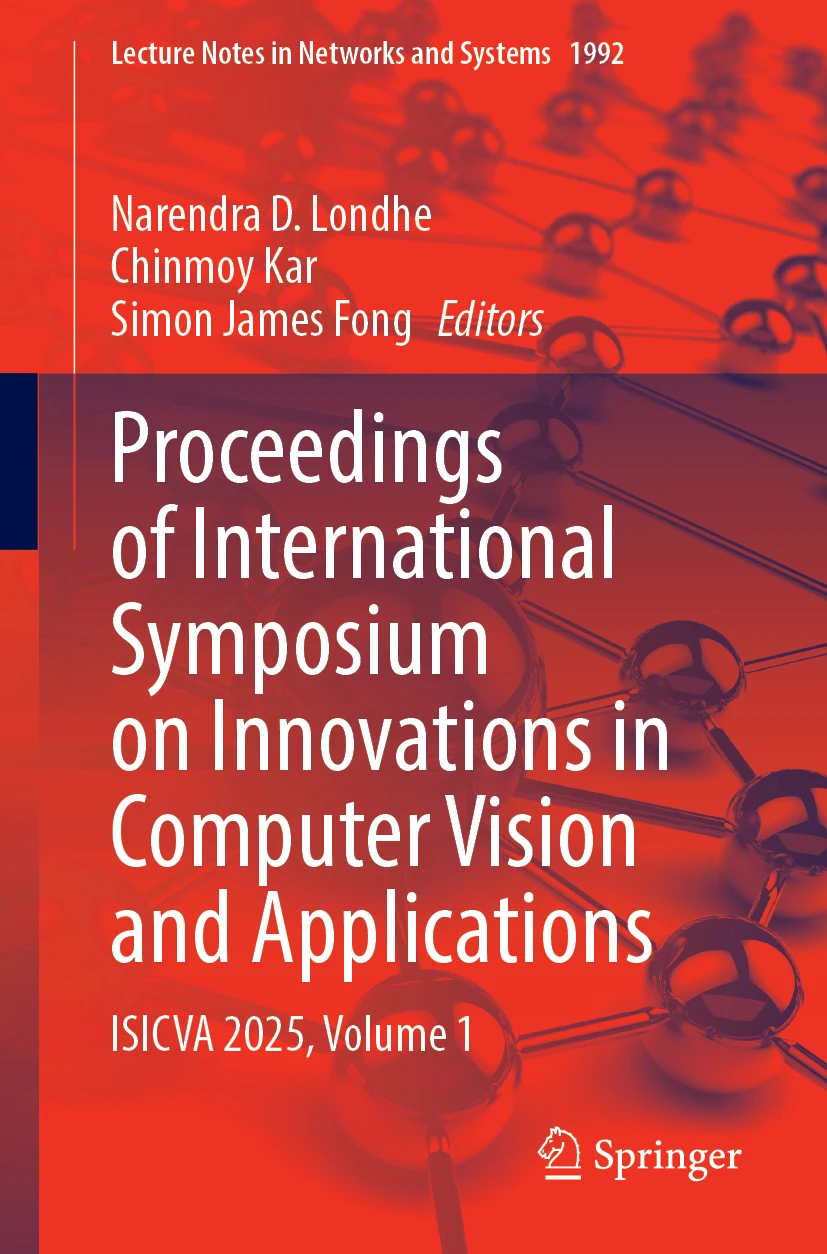
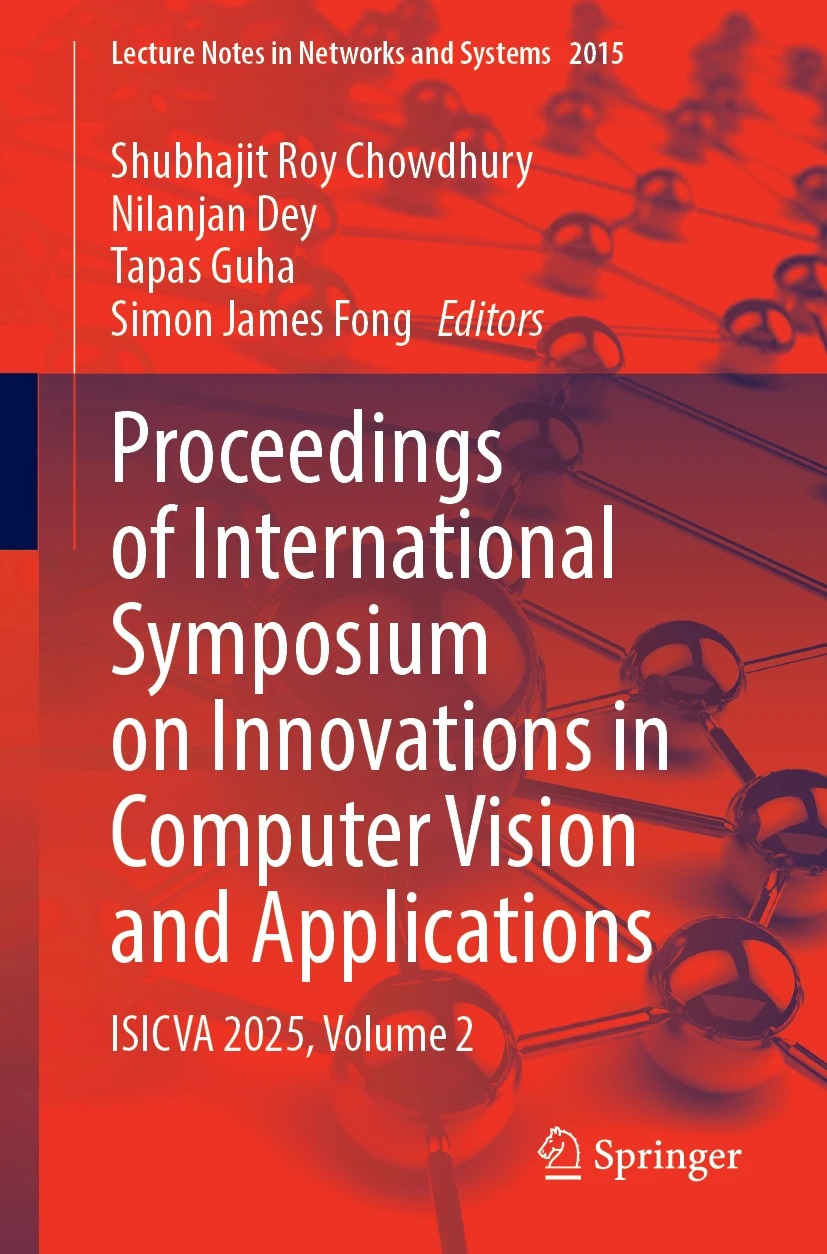
The International Symposium on Innovations in Computer Vision and Applications (ISICVA 2025), held on November 28–29, 2025 at Techno International New Town, Kolkata, brought together researchers, academicians, and industry experts to exchange knowledge and explore emerging trends in computer vision and AI. ISICVA 2025 aimed to foster collaboration across academia, industry, and government, highlighting advancements in areas such as healthcare, autonomous systems, security, and smart cities.
The symposium featured keynote talks, technical sessions, and a pre-symposium workshop, covering diverse topics including machine learning, data analytics, and natural language processing. After a rigorous peer-review process, 42 high-quality papers were accepted and presented across multiple sessions.
The Proceedings of International Symposium on Innovations in Computer Vision and Applications: Vol 1 | Vol 2
Venue
Department of Computer Science & Engineering, Techno International New Town, 1/1, DG Block (Newtown), Action Area I, Newtown, Chakpachuria, West Bengal 700156, India
How to Reach Us
Dumdum Airport to Techno International New Town: Distance is about 12 km, many public busses are available. Cab/Taxi may be the better option to come to Rabindra Tirtha/Biswa Bangla Gate (New town).
Howrah railway station to Techno International New Town: Distance is approximately 22-22km by road. Bus No. S12 or AC12 bus from the nearby bus stop to Rabindra Tirtha/Biswa Bangla Gate (New town).
Sealdah railway station to Techno International New Town: They are numerous bus available from Sealdah to Rabindra Tirtha/Biswa Bangla Gate (New town), the distance is approximately 14-15 km by road.